Welcome to the Niagara Ostomy Association Website!
Serving the Niagara Ostomy Community since 1974
Our mission is to serve and assist all people with ostomies in the Niagara Region.
Who We Are
The Niagara Ostomy Association (NOA) is a volunteer-driven, non-profit organization that provides practical help and emotional support to people with ostomies living in the Niagara Region of Ontario. NOA is self-supporting through funds raised. NOA currently meets monthly in person in St Catharines, Ontario. Our Association is affiliated with the Ostomy Canada Society.
Our Association is for people with ostomies (new and experienced), their family, friends, allied professionals such as medical and service providers, and anyone else who supports them. Please visit our member services page for full details.
People living with an ostomy are eligible for the disability tax credit!
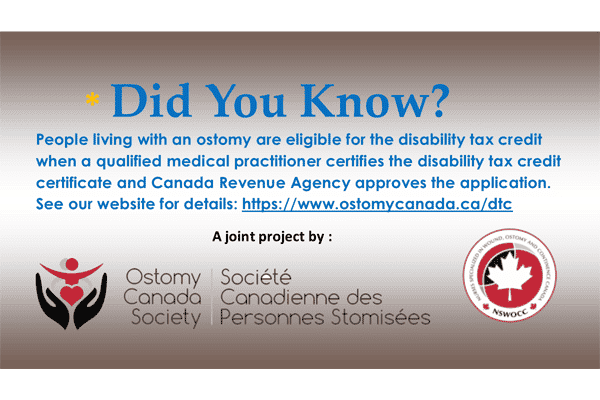 People living with an ostomy are eligible for the disability tax credit!